
What Carroll Tax Records Show
SDAT values the land and improvements. It keeps the property card and decides assessment appeals, while Carroll County Collections issues the bill and takes payments. Two offices, two jobs.
| Field | What It Shows | Where |
|---|---|---|
| Land and improvement values | Separate assessment components | SDAT parcel card |
| Assessment year | Date context for the value | SDAT parcel card |
| Homestead status | Credit eligibility field, not title proof | SDAT parcel card |
| Bill and payment | Current charge and collection status | County Collections |
| Tax certificate | Settlement or delinquency process record | County certification or sale |
Assessment is an estimate of market value. The bill reflects rates, credits, phase-in, and taxing jurisdictions, while recorded sale consideration may fall in a different year. Deed consideration is a third number.
Read Carroll Reassessment Areas
Maryland reassesses real property on a three-year cycle. Land and improvements are valued separately. Carroll Area 1 took effect January 1, 2025 and returns in 2028, while Area 2, effective in 2023, comes up again in 2026. Area 3 was effective in 2024 and is next scheduled for 2027. Increases are generally phased in over three years. Record the area and assessment year before comparing parcels. Two homes on the same street can carry values from different points in the cycle.
Interpret Carroll Ratio Data
Ratios compare assessed value with sale price. The FY2025 Maryland report listed Carroll medians of 94.0 percent residential, 84.7 percent commercial, 94.0 percent agricultural, and 92.7 percent weighted. Only qualifying sales count. A median is a county-level statistic for a category, not evidence that one parcel is discounted. Agricultural use value needs separate care. That category is not a market assessment. Compare the SDAT use field, the assessment date, and any recorded sale terms before drawing conclusions.
Look Up a Carroll Tax Bill
Start with the assessment account. Then use Carroll Collections and Taxes for the bill, payment channels, delinquency material, and annual tax-sale documents.
- Search SDAT by premises address and copy the account identifier.
- Match the account in the county billing route and read the tax year and status.
- Return to the parcel card for assessment year, use, and homestead status.
- Check current tax-sale packets when the record is delinquent.
- Assessed value
- The value maintained for the tax process.
- Tax rate
- The rate applied by a taxing jurisdiction.
- Homestead Tax Credit
- A limit on taxable assessment growth for a qualifying principal residence.
- Tax certificate
- An interest sold through the delinquent-tax process, not an immediate deed.
Order Carroll Tax Certification
Settlement work may need the online tax certification request. The county lists a $40 application fee, a minimum of two business days, and coverage of tax and related county charges. It is not a title search.
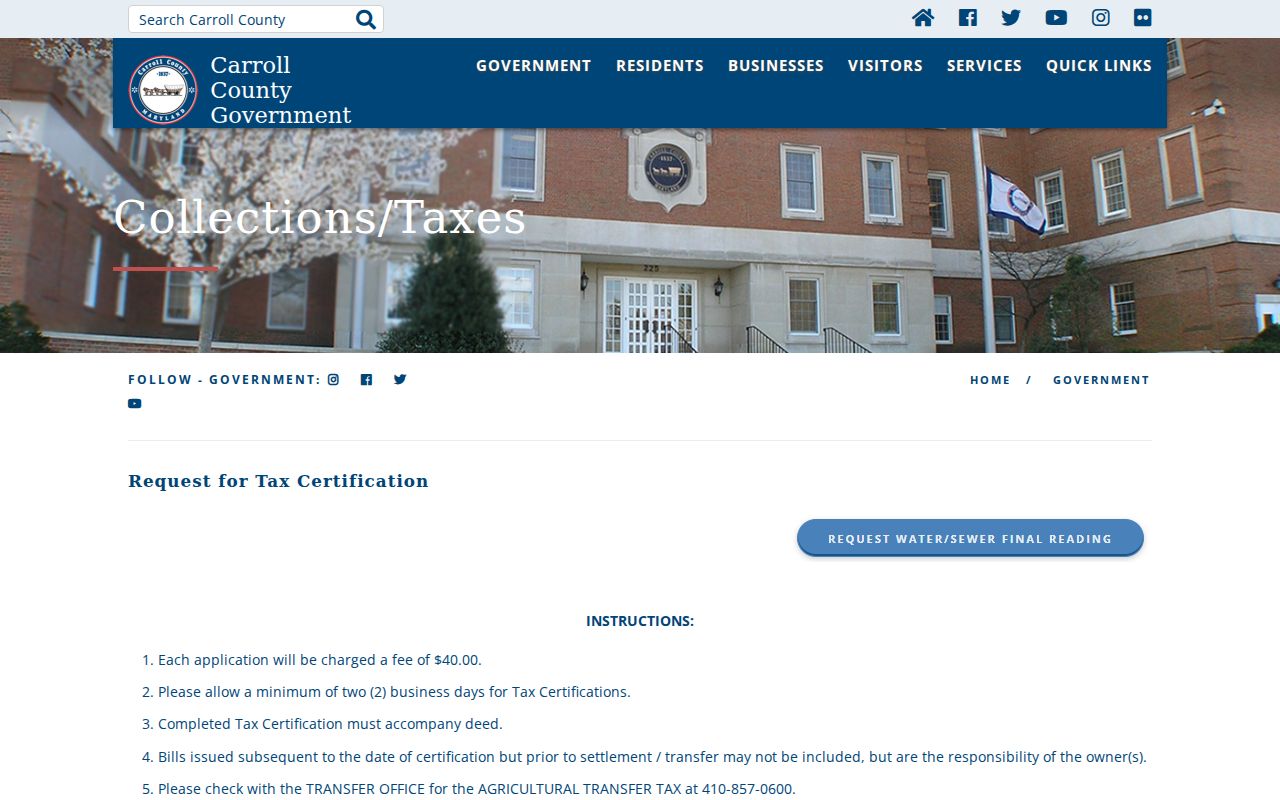
Allow processing time before settlement and confirm the exact account entered.
Track Carroll Tax Sales
Carroll generally runs its annual tax-certificate sale online each June through RealAuction. Collections posts fiscal-year packets and results. Winning a certificate does not hand the bidder instant ownership, because statutory and court steps follow. The Carroll RealAuction route hosts the county's sale.
Reconcile it with court records and any later deed before saying ownership changed.
Separate Carroll Tax Credits
The Homestead Tax Credit caps taxable-assessment increases on a qualifying principal residence. It does not freeze market value. It does not prove occupancy either. The income-based Homeowners' Property Tax Credit uses a different application and deadline. New purchasers generally receive a homestead application after the deed is recorded and SDAT updates its roll. Disputed status goes to SDAT; payments go to Collections.
Compare Assessment and Sale Dates
Maryland's area-sales analysis matches assessments against arm's-length sale prices. The dates matter most. A parcel assessed before a renovation, or sold after a sharp market shift, may not line up with the bill-year number. Write down four things first. Assessment year, date of finality, deed recording date, and sale consideration anchor any ratio. Comparables should match use, location, size, age, and condition. The deed confirms consideration language and SDAT supplies land, improvement, use, and structure fields, but neither alone is a current appraisal.
Resolve Carroll Billing Errors
Send each problem to the right office. SDAT handles assessed value, property description, mailing and principal-residence corrections, reassessment notices, and credit administration. Carroll Collections handles bills, receipts, payments, delinquency, and certification. The Circuit Court Clerk keeps the deed. Bring the account identifier, premises address, tax year, disputed line, and any supporting deed or notice for an owner or transfer correction. A mailing-address mismatch is not automatically the wrong parcel. And a matching owner name does not excuse a wrong account or assessment year.
Read Delinquency With Care
Delinquency moves in stages. The county posts annual tax-sale material and sells certificates through RealAuction. A delinquent account, an advertised parcel, a sold certificate, a foreclosure action, and a final deed are separate steps. Note the tax year and sale status. Then check Maryland Case Search and Land Records. A certification reports specified county charges once processed, but it does not reveal every private lien, settle title, or guarantee a later payment has posted. Order early and verify the account against the premises.
Use the Carroll Appeal Record
The reassessment notice is the key document. It shows the old and new market values. It also shows the Notice Number and Control Number you need for an online appeal. Timing matters. In non-reassessment years, a petition for review is generally due by the first working day after January 1. Someone who purchased the property between January 1 and June 30 may instead qualify for a separate route. It runs 60 days under the state process.
Deadlines continue at every level. The local supervisor decides first. An appeal to the Property Tax Assessment Appeals Board is generally due within 30 days after that. Maryland Tax Court comes next, again within about 30 days of the board's decision. The correct route depends on why and when review is sought. Check the current notice and state instructions before filing.
Understand Land and Improvement Values
Maryland Tax-Property §8-104 requires land and improvements to be valued separately. Seeing the two components side by side helps explain what shifted at reassessment. Neither figure is a contractor's estimate or a guaranteed sale price. Structure fields add context. Year built, living area, basement area, and land area all describe what SDAT has on file. An inaccurate characteristic should be reported to SDAT with support.
A permit or renovation can influence later valuation. The permit itself does not set the assessment, though. Match CPPL or municipal plan records to the same parcel. Then compare the relevant date against the assessment year. That comparison matters most for a split lot, new building, demolition, or change in use.
Keep Credits and Ownership Separate
A Homestead Tax Credit field reflects limits on taxable assessment growth. It applies only to a qualifying principal residence. It is not a deed. It does not establish title. The income-based Homeowners' Property Tax Credit is a separate program with its own application. Neither status proves the owner lives at the premises.
After a sale, SDAT generally sends a homestead application once the deed and assessment roll update. Carroll posts no official average delay from closing to the Owner Name update. If the deed and the card disagree, compare the dates. Then contact SDAT rather than guessing.
Request Tax Files Under the PIA
Most Carroll property tax records flow through standard state or county routes. The Maryland Public Information Act can reach material not posted online. That could be an existing tax-sale list, correspondence, or a dataset. Describe the account, the years, the record type, and the format you want. The law does not force the office to build a custom calculation. It also does not require an answer to a legal question.
A custodian must grant or deny promptly, and no later than 30 days. Production will sometimes likely exceed 10 working days. If so, written notice of timing, fee range, and delay is due within those 10 working days. The first two hours of search and preparation are generally free. Actual copy costs and later labor may still apply.
Appeal a Carroll Assessment
The clock starts with the assessment notice. An initial appeal is generally due within 45 days. SDAT accepts written, phone, video, and in-person hearings. The sequence runs from local supervisor review to the Property Tax Assessment Appeals Board. The next level is Maryland Tax Court, and later levels generally allow 30-day filing periods. The online appeal form asks for the County, Notice Number, and Control Number.
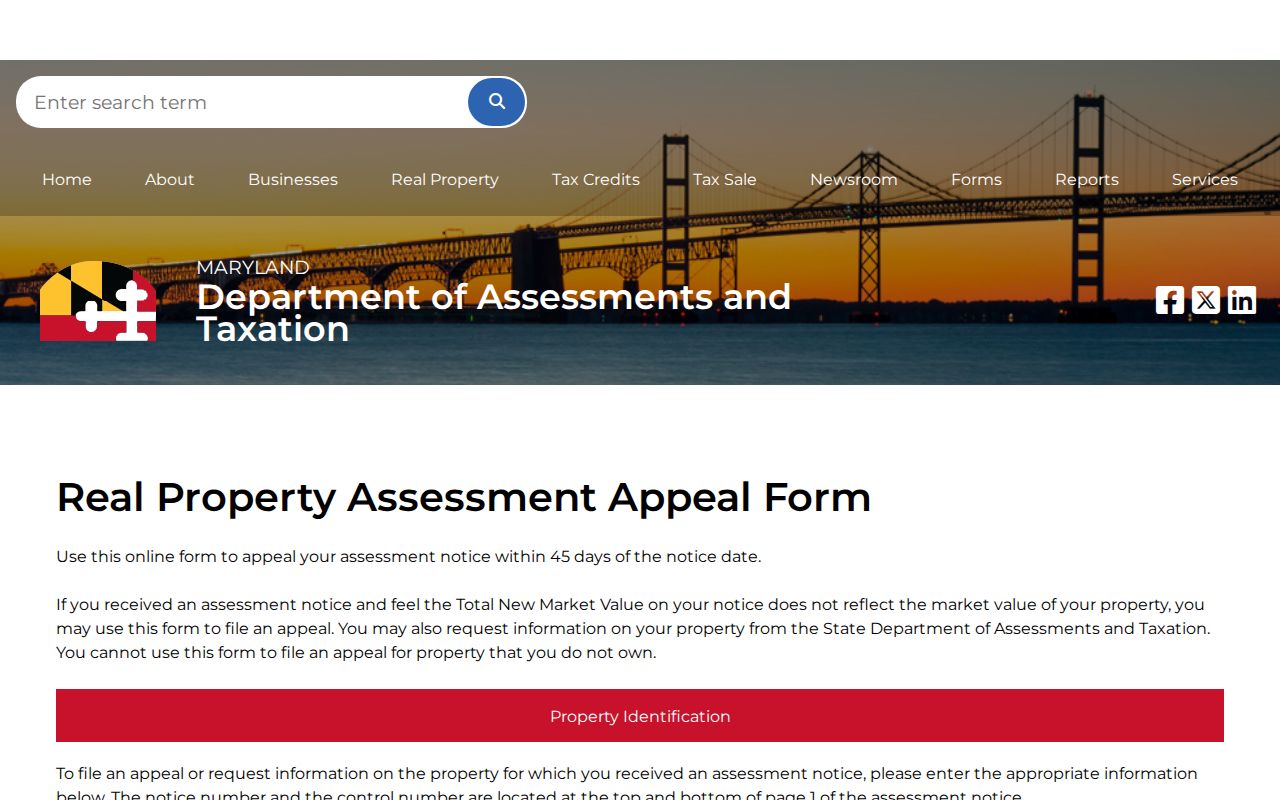
Comparable sales should match both the valuation period and the property type. A ratio report alone is not parcel evidence.
Appeal window. File the first Carroll assessment appeal within 45 days of the notice unless another statutory review route applies.