
Trace Carroll County Former Owners
Start with the current deed reference on the parcel's tax record. That citation points to the transfer just before today's owner of record. Note the grantor, the date, the deed type, and the book and page. Then repeat the step for each earlier conveyance. The legal description has to stay consistent throughout. Tax accounts and street addresses change while the land itself does not. A running transfer table keeps every link visible and testable.
| Transfer date | Grantor to grantee | Deed type | Book and page |
|---|---|---|---|
| Newest recording | Prior owner to current owner | As stated in instrument | Current SDAT reference |
| Prior recording | Earlier owner to prior owner | Sale, trustee, estate, or corrective | Prior deed citation |
| Earlier recording | Repeat verified party roles | Read full conveyance | Index or scanned volume |
| Pre-county link | Parent-county parties | Historic land record | Baltimore or Frederick series |
Treat the working chain as a worksheet, not a settled claim. A named grantor may have held only part of the tract. Deeds from trustees, personal representatives, corrections, quitclaims, and life estates can branch the sequence in ways a simple sale would not, so read each instrument before trusting the line.
Start Carroll County's Former Owner Chain
Begin in SDAT with the known premises. Copy the account number, district, owner name, deed reference, legal description, map, grid, parcel, subdivision, lot, block, and plat number. The tax card is not an ownership history. It gives you the first deed locator and the identifiers that keep the same parcel in view from transfer to transfer. Next, open that book and page in MDLandRec. Read the clause reciting how the grantor acquired the property, whenever one appears, and record the prior deed reference it cites. Party names alone will mislead you here. Long-standing Carroll family surnames and recurring company names invite false matches, so let the citations, not the names, carry the chain.
Walk Carroll County's Owner Chain Backward
MDLandRec's current search guide lays out the controls for party type, ownership type, and legal capacity. It also covers instrument, remarks, cross-reference, and date. These filters matter because every former owner appears in two roles. A grantee receives an interest. A grantor gives one up. To step back through the chain, treat the current deed's grantor as the grantee you now hunt for in the earlier acquisition deed. Let the filters separate the two roles.
- Open the current deed reference and record its grantor, grantee, dates, and full description.
- Search that grantor as a grantee around the cited prior date.
- Verify the earlier legal description and any plat, merger, split, or remaining-portion reference.
- Repeat until the direct index ends, then move to the named archive series.
- Grantor
- The party transferring the interest described in a deed.
- Grantee
- The party receiving that stated interest.
- Chain of title
- The linked sequence of conveyances affecting the same land.
- Reverse index
- An index organized by the receiving party for backward research.
- Quitclaim
- A deed transferring whatever interest the grantor has without a warranty of title.
A shared surname proves nothing on its own. Confirm each link with the parcel description, acreage, adjoining owners, road, plat, and the prior book and page. Where land was divided, follow both the child tract and the leftover parent portion. Otherwise a mere parcel split can masquerade as a change in the owner of record, and the chain will look broken when it is only bent.
Use Carroll County's 1969 Owner Index
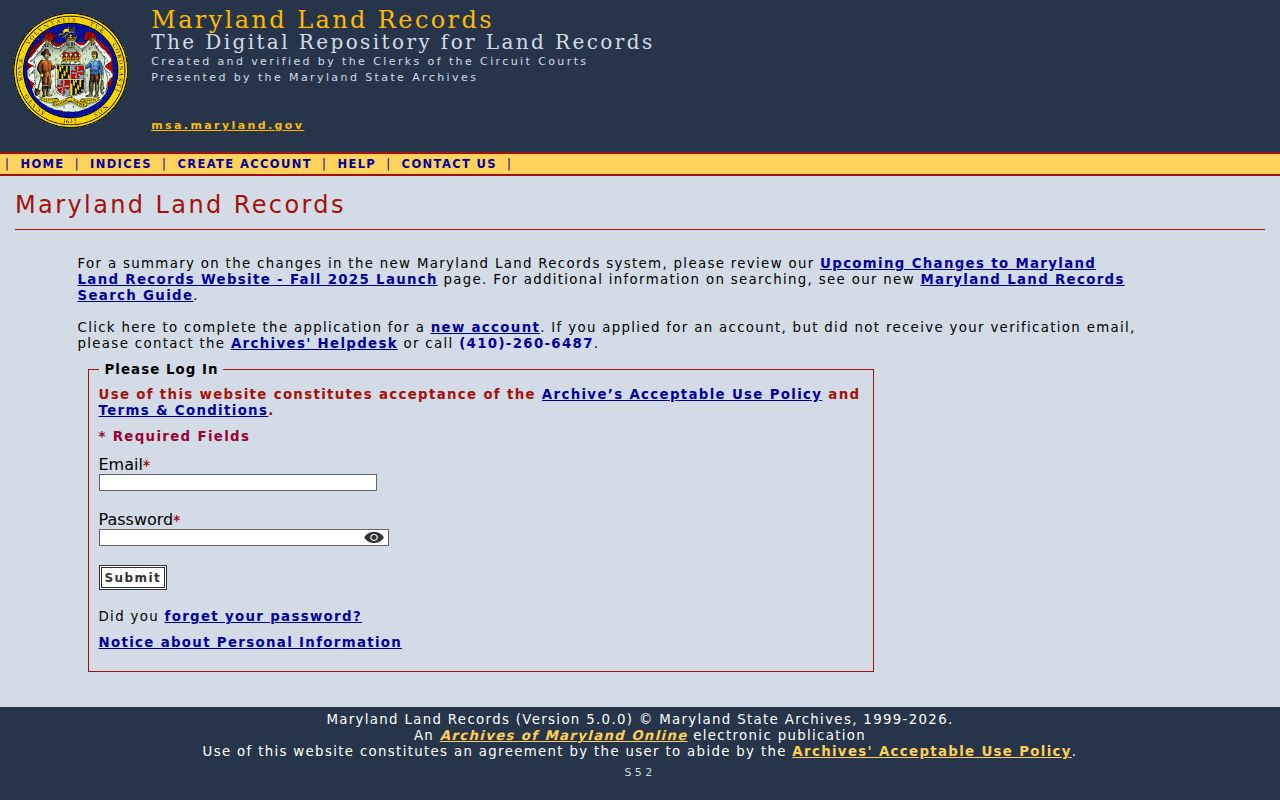
The Carroll Clerk's own instructions set January 1, 1969 as the start of the direct electronic index. That edition carries a stated cutoff the county revises over time. The live boundary can move. Treat both markers as qualifiers rather than fixed walls. Even when a party search stops short, the "Jump to New Volume" feature still helps. It can reach older scanned pages and deed images.
The official MDLandRec display shows the county, book, and page jump. A researcher uses it to move from a deed citation to the recorded image itself.
A dead end before 1969 rarely means the owners are lost. It usually means the parcel's chain has moved out of the electronic index and into older materials. Carroll County property records from that era live in scanned volumes, microfilm, paper indexes, and Archives series instead.
Coverage line. The local direct index begins in 1969; separate Maryland Archives channels carry Carroll land records back to county formation.
Reach Carroll County Owners Back to 1837
The Maryland Archives Carroll guide organizes land and index series by date and format. The electronic grantor and grantee series run under CE246 and CE245. Related C, CM, and T holdings sit on paper or microfilm. Land-record court series reach back to Carroll's 1837 formation. Circuit Court land records continue from 1851. Save the series number and format beside every older result. The archives listing pairs each entry with exactly that information.
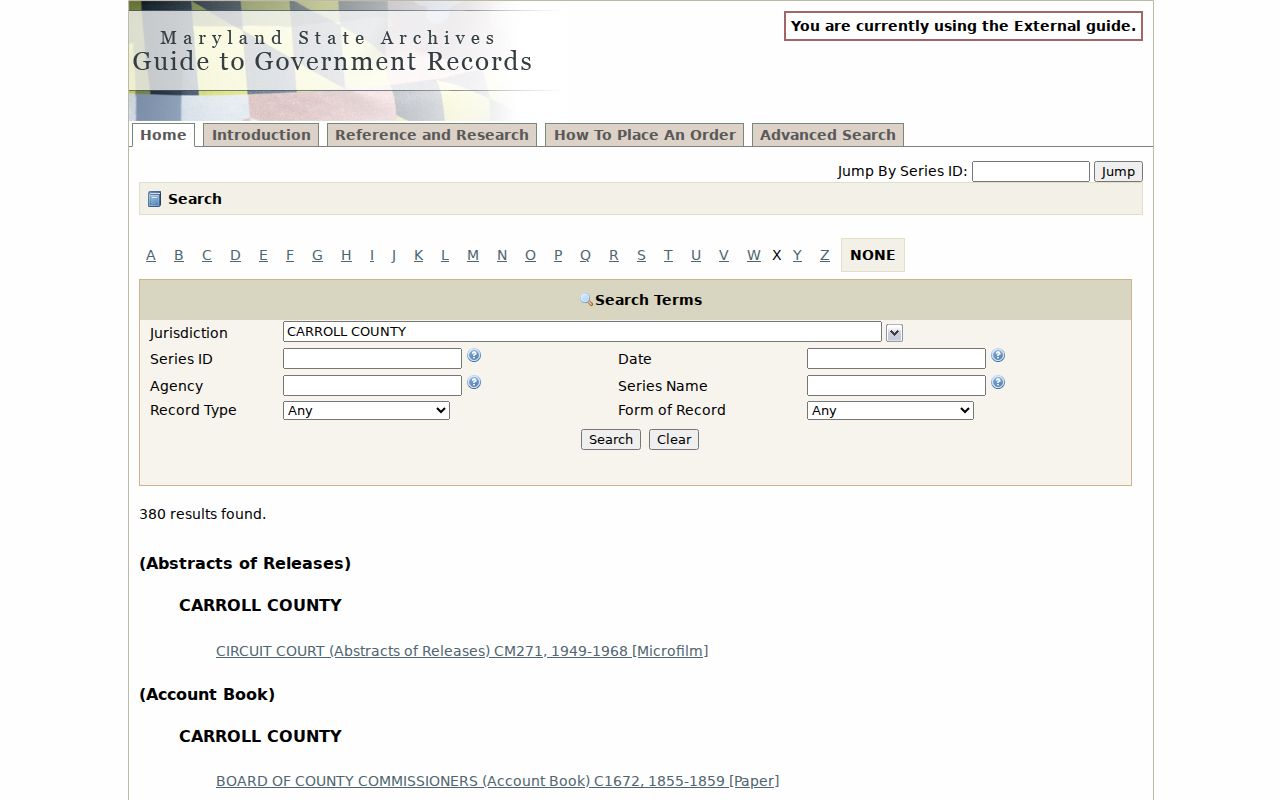
Not everything is electronic. Some holdings sit on microfilm, some are paper originals, and others live in the searchroom or in offsite files. Once you have a name, date range, deed citation, election district, tract, or plat, ask staff for the exact series and item.
Cross Carroll County's 1837 Owner Boundary
Carroll County was carved from Baltimore and Frederick Counties in 1837. Some deeds touch land held before that year. Those chains have to cross into the correct parent county's records. Keep the legal description and tract name handy. Also keep adjoining owners, watercourse, road, and prior deed citation close at hand. Modern municipality and ZIP names are weak keys in that era.
Carroll reports no courthouse fire or broad loss of land records. Do not blame a catastrophe for a missing page. Test the other index, volume, format, parent county, or offsite series first. Then ask Archives staff about a series-specific gap.
Follow Carroll County Former Parcel Splits
Sometimes the chain only looks broken because the land changed shape. Search PLATS.NET for the subdivision or the plat cited in a deed. A final plat can fix the lots, blocks, sections, roads, easements, and the remaining portion. That remaining piece is part of the parent tract. Carroll Development Review treats April 23, 1963 as a property-history checkpoint for some subdivision questions. County guidance also directs researchers to Parcel Inquiry's "More Info" or Plat Link. Those tools help track a remaining portion. Read the plat first. Then read the deed description and SDAT identifiers, and ask Development Review to confirm planning status. GIS cannot settle title or surveyed lines.
Branch Through Carroll County Owner Estates
Not every Carroll County change of ownership comes from a plain sale. A deed can name an estate. It can also name a trustee, a surviving joint tenant, or a court-appointed representative. Probate explains who held authority. The Register of Wills estate record shows that authority and its dates. Land Records holds the instrument that matters. For the parcel itself, go back there. Ask for the deed, the distribution, the survivorship instrument, or the court order.
Older probate files come in many formats. The Archives keeps estate dockets, wills, inventories, and papers across electronic, microfilm, paper, and offsite series. A will alone proves little about land. It names beneficiaries, yet only a recorded deed shows the parcel actually passed to them.
Limit Carroll County Former Owner Research
Former-owner research in Carroll County reconstructs recorded transfers. It cannot settle every question. Easements, mortgage claims, inheritance rights, missing releases, adverse claims, and legal description conflicts all sit outside its reach. Treat newspaper and local-history finds as leads. Search the Historical Society digital library or the Carroll County Times archive for old tract, farm, subdivision, and street clues. Then confirm each one in the deeds and plats.
Lawful use. Trace former Carroll County owners for house history, title work, and parcel diligence. Never use the record trail to harass or target a living person.
For the present owner of record, see the Carroll County current owner page. This chain of property records looks backward only. It follows prior owners and how far the deeds reach.